The way music, podcasts, voiceovers, and digital content are created has changed dramatically over the last decade. Today, creators no longer need to rely exclusively on large commercial studios to produce high-quality content. At the same time, professional studios continue to play a vital role for artists, brands, and productions that demand precision, collaboration, and premium sound quality.
This shift has raised an important question for creators, producers, and business owners alike: Should you build a home studio or invest in a professional studio setup?
The answer depends on your goals, budget, workflow, and long-term vision. In this guide, we break down both options in detail to help you make an informed decision.
Understanding the Home Studio
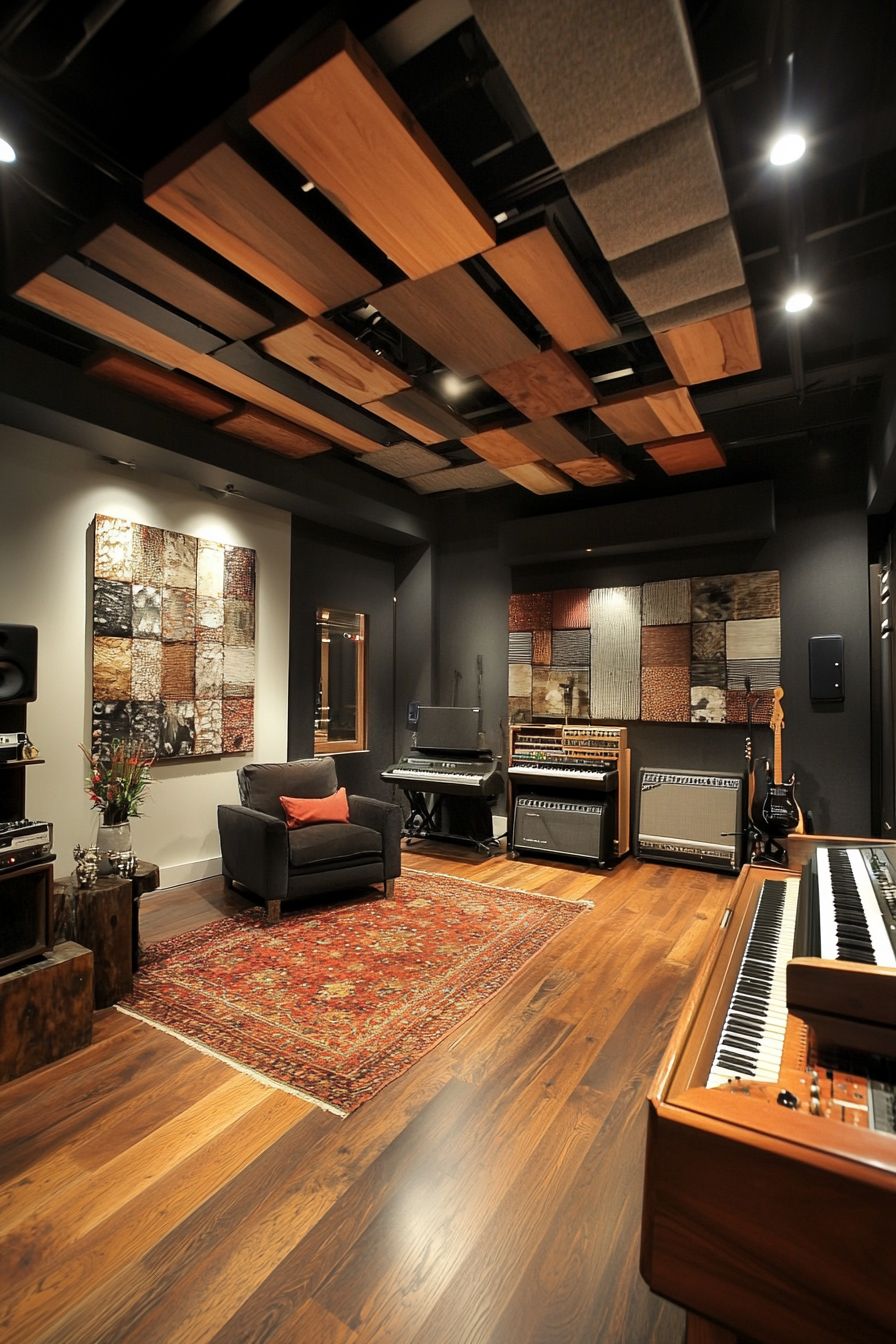
A home studio is a personal creative space built within a house, apartment, or private property. It can range from a simple bedroom setup to a fully treated production room designed for recording, mixing, and content creation.
What a Home Studio Typically Includes
A home studio setup often consists of:
A computer or laptop
Digital Audio Workstation (DAW)
Audio interface
Studio monitors or headphones
Microphone
MIDI keyboard or controller
Basic acoustic treatment
Compact furniture and lighting
Home studios are built for flexibility and independence. They allow creators to work at their own pace without time restrictions or hourly costs.
Advantages of a Home Studio
Creative Freedom and Convenience
One of the biggest benefits of a home studio is unrestricted access. You can work early in the morning, late at night, or whenever inspiration strikes. There’s no scheduling pressure, and ideas can be recorded instantly before they fade.
Cost Efficiency Over Time
While setting up a home studio requires an initial investment, it often saves money in the long run. There are no recurring studio rental fees, making it ideal for independent creators, producers, and podcasters who work frequently.
Personalized Workflow
A home studio is tailored entirely to your needs. You choose the layout, gear, lighting, and workflow that best suits your creative process. This level of customization helps boost productivity and comfort.
If your work is mostly solo or remote, a home studio can be more than sufficient.
Limitations of a Home Studio
Acoustic Challenges
Most homes are not built for sound recording. Without proper treatment, issues like echo, noise leakage, and uneven frequency response can affect recording quality.
Space Constraints
Limited room size can restrict equipment choices, instrument placement, and monitoring accuracy. This can be a challenge for producers working with live instruments or multiple performers.
Perception and Professional Image
Some clients and collaborators may associate professional quality with commercial studios. A home setup, no matter how well built, may not always carry the same visual or branding impact.
Understanding the Professional Studio
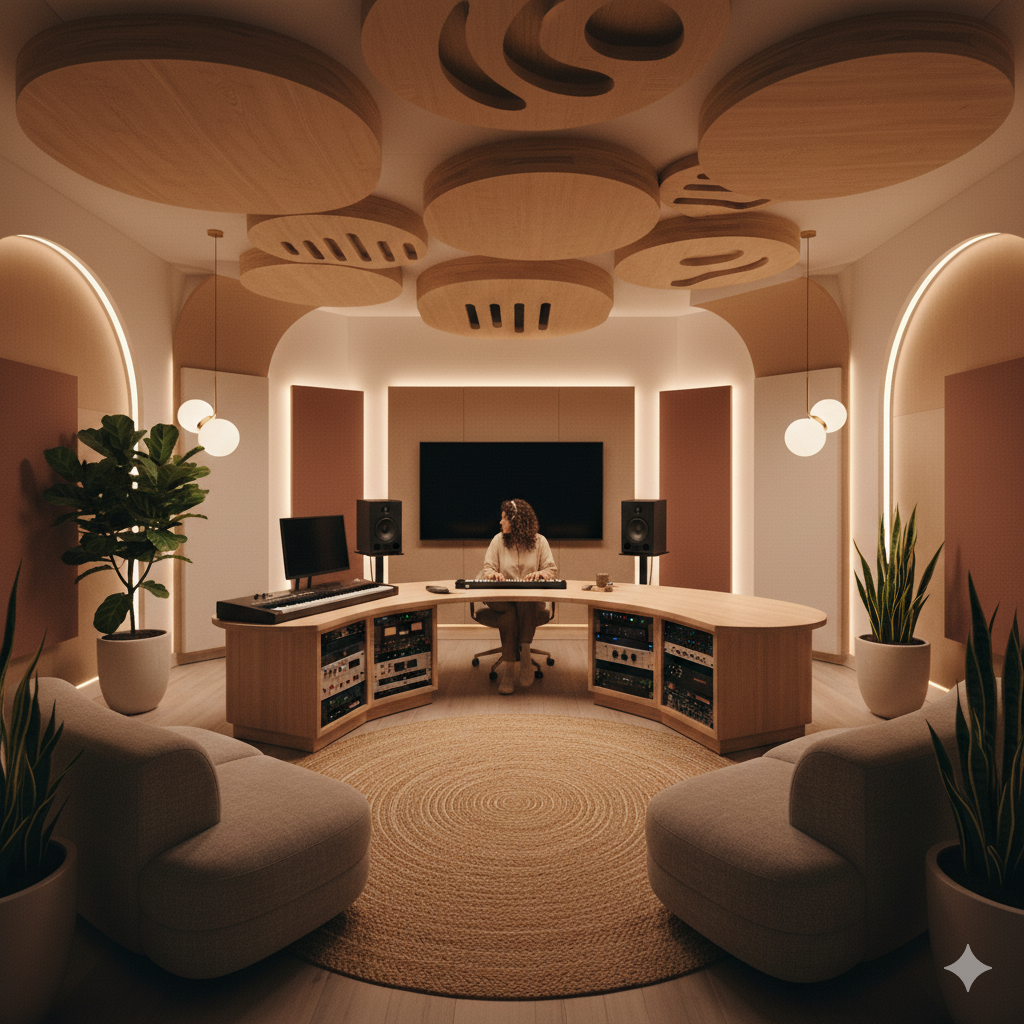
A professional studio is a dedicated commercial or semi-commercial space designed specifically for audio production. These studios are purpose-built with architectural acoustics, soundproofing, and high-end equipment.
What Defines a Professional Studio
A professional studio typically features:
Acoustically engineered rooms
Soundproof construction
High-quality microphones and preamps
Advanced monitoring systems
Control rooms and live rooms
Professional lighting and furniture
Space for multiple clients or performers
These studios are designed for precision, collaboration, and consistent high-level output.
Advantages of a Professional Studio
Superior Sound Quality
Professional studios are built with acoustics in mind from the ground up. This results in cleaner recordings, accurate monitoring, and mixes that translate well across different playback systems.
Client-Ready Environment
For commercial projects, a professional studio creates confidence. Artists, brands, and corporate clients expect a polished environment that reflects quality and reliability.
Collaboration and Scalability
Professional studios are ideal for:
Recording multiple musicians
Hosting producers, engineers, and artists
Managing large projects
Handling commercial voiceovers, ads, and media production
The space supports teamwork and efficient session management.
High-End Equipment Access
Professional studios often house premium gear that would be too expensive or impractical for home use. This includes specialized microphones, analog processors, and advanced monitoring systems.
Comparing Home Studio and Professional Studio
Budget and Investment
Home studios require a lower initial budget and are easier to scale gradually. Professional studios demand higher upfront costs but offer greater earning potential when run commercially.
Intended Use
Home studios are best for personal projects, content creation, and remote work. Professional studios excel in commercial recording, client-based services, and collaborative productions.
Growth and Business Goals
If your goal is personal creativity or freelance production, a home studio may be sufficient. If you aim to build a studio brand, attract clients, and operate as a business, a professional studio setup becomes essential.
Which One Is Right for You?
Choose a Home Studio If:
You work mostly alone
You want flexible recording hours
You are budget-conscious
You create digital content, beats, or voice recordings
You value comfort and privacy
Choose a Professional Studio If:
You plan to serve paying clients
You record multiple artists or instruments
You need top-tier acoustics
You want to build a studio business
Brand perception matters for your work
Hybrid Approach: The Best of Both Worlds
Many modern creators adopt a hybrid model. They maintain a home studio for daily production and idea development while using a professional studio for:
Final recordings
Mixing and mastering
Client sessions
High-profile projects
This approach offers flexibility while maintaining professional quality when it matters most.
Planning Your Studio the Right Way
Whether you’re setting up a home studio or building a professional space, planning is critical. Key factors to consider include:
Room size and layout
Acoustic treatment needs
Equipment selection
Lighting and comfort
Workflow efficiency
Long-term scalability
A well-planned studio saves money, improves output quality, and enhances the creative experience.
Final Thoughts
Serving Both Home and Professional Creators
Modern studio brands no longer serve only one category of creator. Today’s market includes:
Bedroom producers scaling up
Podcasters turning professional
Musicians transitioning to commercial work
Brands investing in in-house studios
Supporting both home and professional studio needs means offering flexible solutions, expert guidance, and scalable setups that grow with the creator.